


What are prefabricated and modular homes?
Both prefabricated and modular homes are constructions manufactured in enclosed conditions – in a production hall. In the case of prefabricated homes, building elements such as walls, roofs, and sometimes even floors are produced in the manufacturing plant. A fully prefabricated unit may already include installed windows, electrical systems, and finished interior walls at the production stage. The ready-made elements in the form of panels are then transported to the target plot, where the components of the house are assembled. Erecting the building usually takes no longer than 1–2 working days. Examples of prefabricated constructions can be found in our home offer.
Modular homes, like prefabricated ones, are produced in a production hall. However, these buildings leave the factory as complete “boxes” – modules, where each module includes connected walls, roof, and floor. A module may be a standalone building or a component of a multi-module building.

How are prefabricated and modular homes built?
Prefabricated homes are most commonly constructed using timber-frame or expanded clay aggregate technology. Modular homes are often based on a steel frame or timber, like prefabricated homes. Loading and unloading entire modules requires a uniform, rigid structure. A house built using a timber frame is filled with mineral, rock, or wood fiber wool.
Regardless of the chosen construction method, the house must first be fully designed. Prefabrication allows no room for error—once production begins, changes are usually not possible. All components must perfectly match the pre-designed foundation, so dimensions, installations, and every construction element must remain fixed during production. After the foundation is prepared and the house is produced, the only task left is assembling all components on the site.
The assembly of a modular home takes about the same amount of time as a prefabricated one. However, modular buildings may be more advanced in terms of finishing. Modules can also be combined to build larger structures such as spacious homes or office buildings. Modular constructions, however, have very limited shapes and forms due to transportation constraints. Therefore, modular buildings are usually cubes with flat or mono-pitched roofs.
Looking for a ready-made prefabricated house design?
Download our free catalog.
Download the full offer.
Stay in touch and download our catalog containing all our designs with detailed pricing.
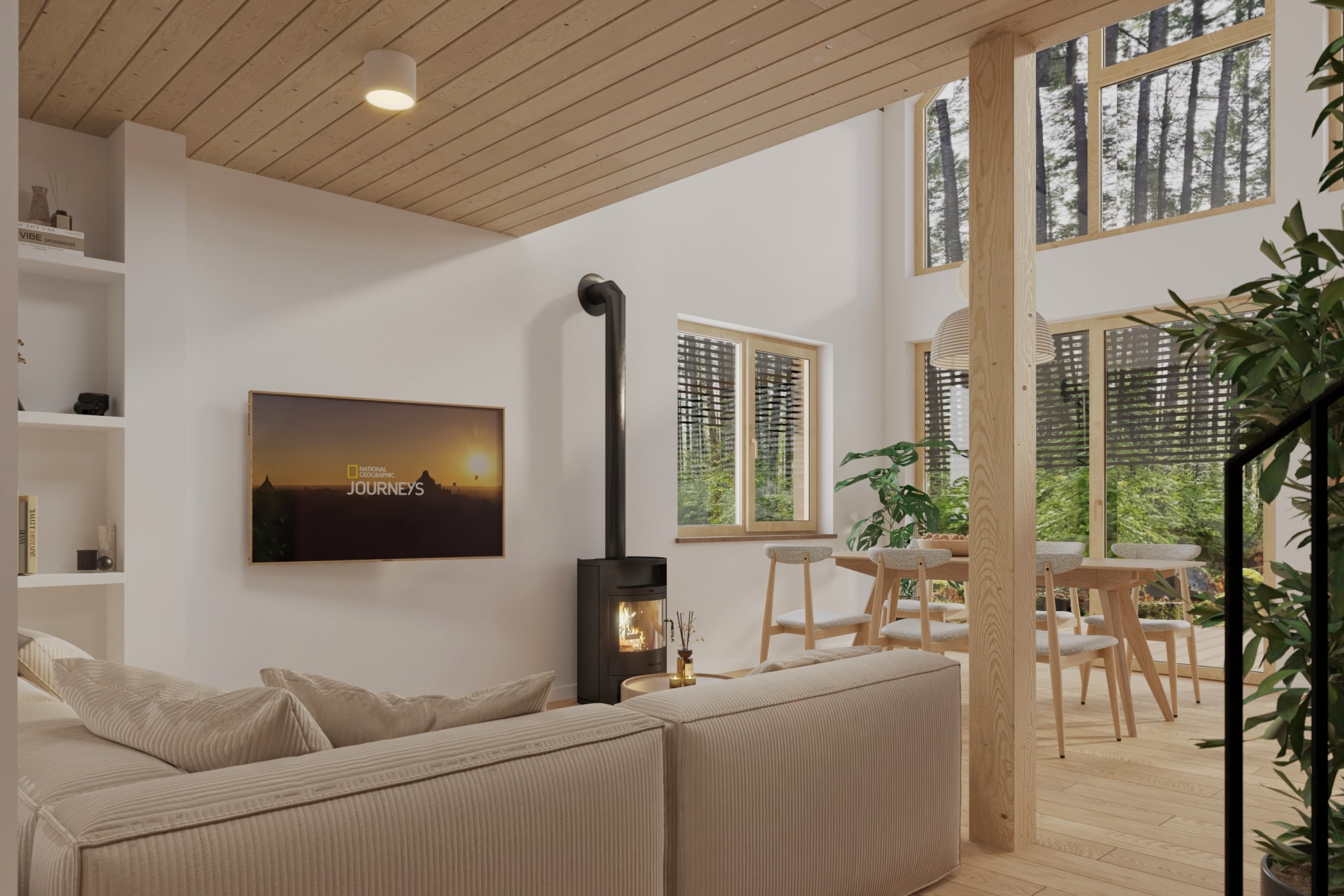
Is the price of a prefabricated house higher than traditional construction?
In catalog terms, probably yes. In reality, not at all. During traditional, “wet” house construction, the burden of planning, supervision, and almost daily participation falls on us. These projects often last up to a year. Using various subcontractors almost always leads to unplanned design changes, difficulties in supervising multiple parties, and issues arising from changing weather conditions. This results in higher final costs, project delays, and wasted time, stress, and potential execution errors.
With prefabricated homes, the final price is known upfront. All operational issues disappear. If the house is to go into production, it must be fully designed in advance. No changes are possible afterward. This is why most companies offering this technology have ready-made, proven projects. The contractor knows exactly how the construction will proceed. The investor doesn’t need to supervise the site daily, worry whether the crew showed up, or pay extra for solutions not included in the initial quote.
In the end, the price of a prefabricated house often does not differ drastically from houses built using traditional methods.
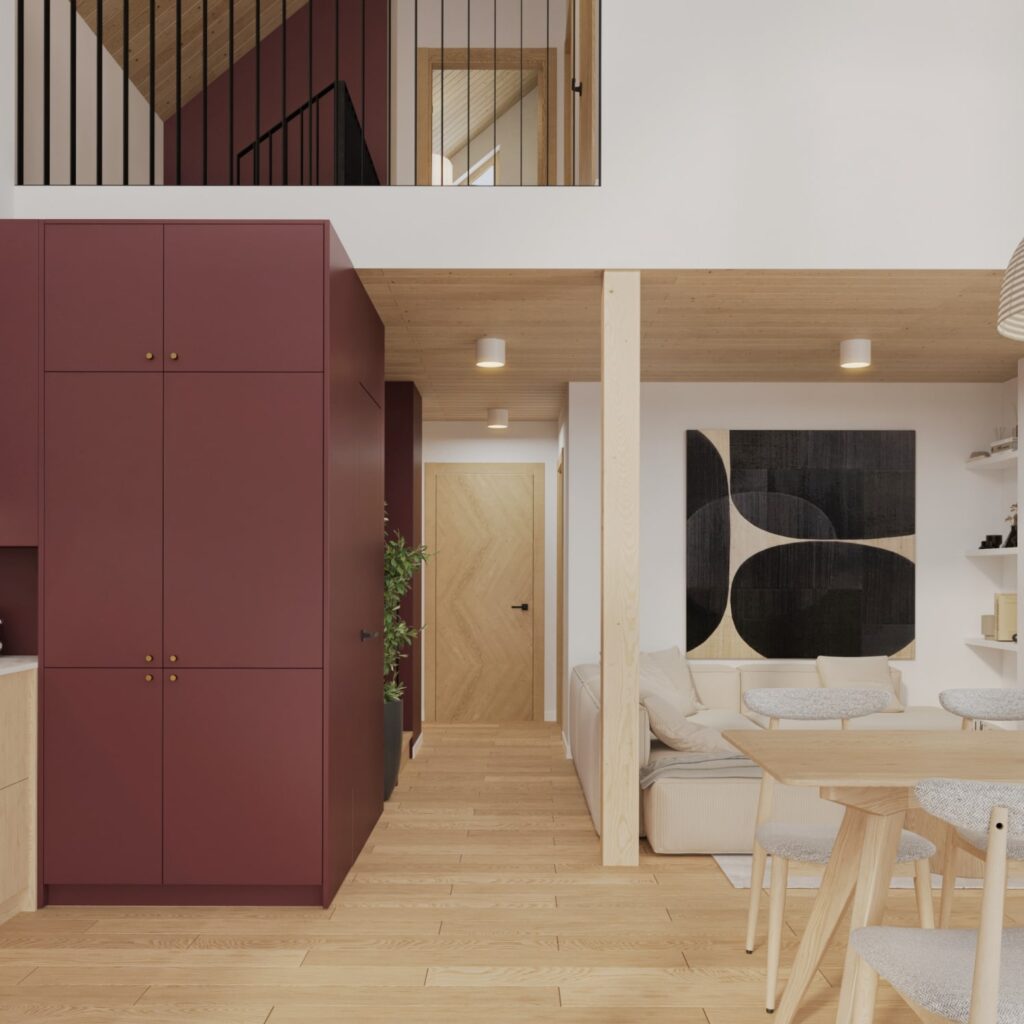
When to choose a ready-made design and when to create your own?
Choosing a contractor’s ready-made design guarantees that the building has already been constructed several times, and the design has been refined based on past experience. Most often, one can already see what the house looks like in reality and assess whether it meets expectations. This greatly simplifies the decision-making process and gives peace of mind, knowing what the final result will look like.
If you have your own concept for a house, you’ll likely find a prefab-specialized contractor willing to take on the challenge. However, preparing production for a custom one-off design will take more time and cost more.
Advantages of prefabricated homes
Thanks to production in controlled, enclosed conditions and earlier implementation of the same design, the quality of prefabricated homes is significantly higher compared to traditional homes:
- Very short completion time – as little as 3 months from contract signing
- Possibility to finish many interior elements during production
- No need for construction knowledge – the contractor provides all specialists
- Independence from weather conditions
- Each production stage is subject to strict quality control
- No need to hire a construction supervisor
7. No risk of material theft from the construction site Overall, you save time and avoid stress.
Disadvantages of prefabricated homes
- Ensuring proper access to the plot for heavy equipment (e.g., HDS crane truck)
- No possibility of design changes after production starts
- Most financing must be covered before the house is assembled on the plot
Check out our offer of prefabricated timber-frame homes.
Would you like a more detailed offer? Let us know what you’re interested in, and we’ll get back to you with a tailored solution.
Contact Us
Looking for a tailored offer? Tell us what you’re interested in, and we’ll respond with a solution.
info@modularen.com
Phone
+ 48 536 838 863
+ 48 535 602 351
Address
Modularen Sp. z o.o. ul. Puławska 228/1 02-670 Warszawa